


Venice Estate Planning Attorneys
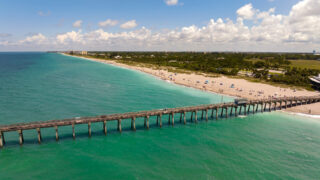
Venice is one of the most concentrated retirement communities in Florida. The median age here is about 69, per U.S. Census Bureau American Community Survey estimates, roughly three decades above the national figure. That shapes what estate planning looks like in this community. The people who sit down with us in Venice are rarely starting from zero. They arrive with a will signed in Ohio twenty years ago, a power of attorney from Michigan, a trust drafted in New York, and a very reasonable question: does any of this still work now that I live in Florida?
McNary Law is a women-owned and women-led firm serving Venice and southern Sarasota County from our Bradenton office, and most estate planning matters can be handled remotely if the drive up US 41 is not appealing.
Moving to Venice from another state? Your documents mostly came with you
Florida law is more welcoming to out-of-state documents than many new residents fear, but the details matter.
Your will is generally still valid. Under section 732.502(2), Florida Statutes, a will executed by a nonresident is valid here if it was valid under the laws of the state or country where it was signed. There is one significant exception: Florida does not recognize holographic wills, meaning handwritten wills that were never witnessed. A handful of states permit them. If your will was typed, signed, and witnessed in the usual way, that exception will not affect you. If it was handwritten without witnesses, Florida treats it as no will at all, even if it was perfectly valid where you made it. A will that was made self-proving under another state’s law is also treated as self-proved in Florida under section 732.503(2), which spares your witnesses from being tracked down decades later.
Your power of attorney likely survives the move too. Section 709.2106(3) provides that a power of attorney executed in another state is valid in Florida if it complied with that state’s law when signed.
So why review anything? Because valid is not the same as practical. Your named agents and personal representative may still live a thousand miles away. Your documents will not account for Florida’s distinctive homestead rules, which affect how your home passes at death. And banks and title companies here are simply more comfortable with Florida-form documents, which can save your family friction at the worst possible time. A review does not always mean starting over; sometimes it means confirming that what you have works and updating one or two pieces.
The core documents in a Florida estate plan
A last will and testament. Florida’s execution requirements are strict and specific. Under section 732.502, the will must be in writing, signed by you at the end, in the presence of two witnesses, who must then sign in your presence and in each other’s presence. Getting this ceremony right is most of what keeps a will out of trouble. Adding a self-proof affidavit under section 732.503 is standard practice and is designed to streamline the will’s admission to probate.
A revocable living trust. Under section 736.0602, you may amend or revoke your trust at any time unless its terms expressly make it irrevocable, and under section 736.0601 the capacity required is the same as for making a will. Assets properly retitled into the trust are administered under the trust’s terms rather than through your probate estate, which is why trusts are the centerpiece of many probate-avoidance plans. Whether a trust earns its keep in your situation depends on what you own and how it is titled, which is exactly what a planning conversation is for.
A durable power of attorney. Florida requires the document to be signed by you and two witnesses and acknowledged before a notary under section 709.2105, and it must contain durability language under section 709.2104 so that it continues to work if you later become incapacitated. Without durability language, the document can fail precisely when it is needed most.
Advance directives for health care. These name the person who speaks for you on medical decisions and record your wishes about care. For many Venice residents these documents carry as much day-to-day importance as the will itself.
Probate in Venice and southern Sarasota County
Venice sits in Sarasota County, so probate for Venice residents runs through the Twelfth Judicial Circuit. Cases from the southern part of the county are handled at the South County Courthouse at 4004 S. Tamiami Trail in Venice, and the Clerk of Court’s Venice branch operates from the R.L. Anderson Administration Building at 4000 S. Tamiami Trail. Families should also know that under section 732.901, whoever holds an original will must deposit it with the clerk within 10 days after learning of the death.
Florida offers two main probate tracks. Summary administration is the streamlined path, and it just became available to far more families: for deaths on or after July 1, 2026, it applies when the estate’s nonexempt assets total $150,000 or less, double the previous $75,000 limit, under section 735.201 as amended by Chapter 2026-57, Laws of Florida. It is also available regardless of estate size when the person has been deceased for more than two years. Larger estates go through formal administration under Chapter 733, a fuller court process with a personal representative and a creditor claims period.
When to update a plan you already have
The common triggers are the ones you would expect: a marriage, a divorce, a death in the family, new grandchildren, selling the house up north, or a diagnosis that changes the planning horizon. The less obvious trigger is the law changing underneath your documents, and 2026 is a live example, with Florida doubling the summary administration threshold mid-year. A plan drafted around the old numbers may deserve a fresh look. Because we practice both estate planning and family law, we also see the intersection cases often, such as what a divorce should mean for your beneficiary designations and your trust.
I signed my will in another state. Is it valid in Florida?
Generally yes, if it was valid under the law of the state where you signed it, per section 732.502(2). The exception is a holographic will, an unwitnessed handwritten will, which Florida does not recognize even if your former state did.
Does my out-of-state power of attorney still work here?
If it complied with the other state’s law when you signed it, Florida treats it as valid under section 709.2106(3). Many new residents still choose to execute a Florida-form power of attorney because local institutions process them with less friction.
What is summary administration, and would my family qualify?
It is Florida’s simplified probate process. For deaths on or after July 1, 2026, it is available when nonexempt probate assets total $150,000 or less, or whenever the person has been deceased more than two years, under section 735.201 as amended in 2026. Exempt property, including protected homestead, does not count toward the limit.
Where are probate cases for Venice residents handled?
In the Twelfth Judicial Circuit. South county cases are heard at the South County Courthouse, 4004 S. Tamiami Trail in Venice, with the Clerk’s Venice branch at the R.L. Anderson Administration Building next door at 4000 S. Tamiami Trail.
Do I need a trust to avoid probate?
Not necessarily. Assets properly titled in a revocable trust pass under the trust rather than through probate, but beneficiary designations, joint ownership, and Florida’s homestead rules also move property outside probate. The right mix depends on what you own. That is a conversation, not a formula.
Talk to a Venice estate planning attorney
McNary Law serves Venice and southern Sarasota County with estate planning, probate, and family law, in person from our Bradenton office or remotely. Call (941) 345-1662 or contact us to schedule a consultation.
This page provides general information, not legal advice.